Over the past few days I've seen several news stories here in New Jersey claiming that sharks have been seen swimming in the Ocean. Now, it only makes sense that sharks would be seen swimming in the Ocean as that is in fact where they live. The conditions are literally perfect in New Jersey right now for sharks to be about. There is a TON of little fish (silversides) that are around. Chasing them around are the bigger fish, the bluefish. Following the bluefish are the biggest fish, sharks. With that being said. The food chain is occurring literally just off the coast. It is no freak chance that fisherman have started catching sandbar sharks from the beach. They are their every year doing the same thing, chasing bluefish and silversides.
Just three miles off of Sea Girt, a great white shark was tagged just about 2 weeks ago. Much like the sandbar sharks, the great whites in the area hunt the larger bony fish we get here in New Jersey such as bluefish. Every year we also get stingrays here in New Jersey. Rays have been seen swimming in the waters off the coast of New Jersey over the past few days. These rays are much more interested in finding clams and crabs hiding in the sand than trying to sting every human they see. The only way a ray will ever sting a person is if the ray feels it's the last resort.
Despite rays and sharks both being present in New Jersey waters, there have been no shark attacks or ray stings. None of these animals are out to get us. Despite the claims that Hollywood has made, these animals are not our enemies. Every time we enter the Ocean we are stepping into their backyard. Treat their home with respect and treat them with respect and you will be given that same respect. Swim with a bunch of injured bluefish and disrespect the sharks, don't be surprised if you get bit. Step on a ray and disrespect in. Don't be surprised if you get stung. Swim sensibly, don't swim alone, don't swim at dusk or dawn and I can guarantee you, you will not have a negative encounter with a shark.
Tuesday, July 31, 2012
Saturday, July 28, 2012
The Truth About Great Whites
The words great and white in the same sentence is enough to strike unimaginable fear into the hearts of many people. With Jaws being released on Blu-Ray this August, the time has never been better to realize the truth about great white sharks. This species of shark has been a source of great fear for several years now. As a direct result of that fear, people have avoided going into the Ocean, people have killed sharks, people have rallied against them, and people have even gone out and tried to slaughter as many as they humanly can. The truth of the matter tough, is much different.
Great white sharks are a large species of shark that have gotten a really bad rep for being vicious man eaters. The primary diet of a great white shark consists largely of marine mammals such as seals and sea lions as well as some large fish and rays. One thing is certainly not a piece of that diet. Humans. Despite great whites having killed more people than any other people in the world, they are far from the monsters people make them out to be. Lets dive into the heart of shark attacks involving great white sharks. When great whites come in contact with people, attacks occur as a case of mistaken identity. Sharks have incredible senses, but the one sense of a great white that gets negated is the sense of vision when it comes to biting. In an effort to protect their eyes, great whites roll their eyes into the back of their head to prevent any damage from occurring to their eye. It is a great adaptation that these sharks have and it works really well. Sadly for humans though, this adaptation is the one thing that has a lot of responsibility in a shark attack.
From underwater, things do not look at all what they look like on land. Lets look at some pictures.

Here's a picture of some seals. To a great white this is an amazing meal. Ok so next picture.

Here's a picture of a sea turtle. To a great white, this is a potential meal. Next picture...

Here's a picture of a guy on a surfboard.... Well... This is not a meal for a great white. The point of this though is this...
Take a look at the three pictures. On a surfboard, a person looks very similar to a seal. On a boogie board, a person looks very similar to a sea turtle. You have two hands just like a seal has two flippers. you have two feet just like seals have two rear flippers. We have an elongated body just like a seal. The bottom line is this. From underwater, seals and sea turtles look just like a person on a board. To a shark who rolls their eyes into the back on their head, they cannot tell the difference between a seal and a person. This is why great whites are known to only bite a person once. They have a very good sense of taste and will reject humans the moment they get that taste in their mouth. The problem comes in the fact that these animals are so large and hit so hard, there is really nothing that can be done to prevent serious injury.
The truth remains though. Great whites are not the vicious man eaters that Hollywood and the media has made them out to be. They are extremely intelligent and come in contact with divers almost on a daily basis and no attacks happen. The best way to avoid a bad encounter with a great white, do a few simple things that are probably good practices anyway. 1.) Never swim alone. Rip currents kill infinitely more than sharks do, so it is a good practice to swim with at least one other person. 2.) Do not swim as the sun is coming up. Sharks usually feed in the morning. Another good practice since it is not the easiest thing seeing in the Ocean when the sun is directly in your eyes. 3.) Do not swim when the sun is going down. Same thing as in the morning, sharks feed as the sun sets. It's a good practice not to swim when it gets dark anyway.
So hopefully this will help you have a better understanding about Great White Sharks. So the next time you watch Jaws, remember that Jaws is Hollywood. Reality is a totally different thing.
Great white sharks are a large species of shark that have gotten a really bad rep for being vicious man eaters. The primary diet of a great white shark consists largely of marine mammals such as seals and sea lions as well as some large fish and rays. One thing is certainly not a piece of that diet. Humans. Despite great whites having killed more people than any other people in the world, they are far from the monsters people make them out to be. Lets dive into the heart of shark attacks involving great white sharks. When great whites come in contact with people, attacks occur as a case of mistaken identity. Sharks have incredible senses, but the one sense of a great white that gets negated is the sense of vision when it comes to biting. In an effort to protect their eyes, great whites roll their eyes into the back of their head to prevent any damage from occurring to their eye. It is a great adaptation that these sharks have and it works really well. Sadly for humans though, this adaptation is the one thing that has a lot of responsibility in a shark attack.
From underwater, things do not look at all what they look like on land. Lets look at some pictures.
Here's a picture of some seals. To a great white this is an amazing meal. Ok so next picture.
Here's a picture of a sea turtle. To a great white, this is a potential meal. Next picture...
Here's a picture of a guy on a surfboard.... Well... This is not a meal for a great white. The point of this though is this...
Take a look at the three pictures. On a surfboard, a person looks very similar to a seal. On a boogie board, a person looks very similar to a sea turtle. You have two hands just like a seal has two flippers. you have two feet just like seals have two rear flippers. We have an elongated body just like a seal. The bottom line is this. From underwater, seals and sea turtles look just like a person on a board. To a shark who rolls their eyes into the back on their head, they cannot tell the difference between a seal and a person. This is why great whites are known to only bite a person once. They have a very good sense of taste and will reject humans the moment they get that taste in their mouth. The problem comes in the fact that these animals are so large and hit so hard, there is really nothing that can be done to prevent serious injury.
The truth remains though. Great whites are not the vicious man eaters that Hollywood and the media has made them out to be. They are extremely intelligent and come in contact with divers almost on a daily basis and no attacks happen. The best way to avoid a bad encounter with a great white, do a few simple things that are probably good practices anyway. 1.) Never swim alone. Rip currents kill infinitely more than sharks do, so it is a good practice to swim with at least one other person. 2.) Do not swim as the sun is coming up. Sharks usually feed in the morning. Another good practice since it is not the easiest thing seeing in the Ocean when the sun is directly in your eyes. 3.) Do not swim when the sun is going down. Same thing as in the morning, sharks feed as the sun sets. It's a good practice not to swim when it gets dark anyway.
So hopefully this will help you have a better understanding about Great White Sharks. So the next time you watch Jaws, remember that Jaws is Hollywood. Reality is a totally different thing.

Friday, July 27, 2012
The Tale of Shark Finning
They say seeing is believing. With that being said, this is a fair warning to the graphic nature of this blog in regards to shark finning. The results of shark finning will see the end of the world as we know it and that time could come sooner than you may think with more and more sharks being killed every day. Their stories sadly will never be told. The story of being dragged onto a boat (equivalent to a person's head being held underwater). The story of having their fins hacked off by a machete one by one. (equivalent to a person's arms and legs being cut off one by one.) The story of being thrown back into the sea to either bleed to death, be eaten by scavengers, or starve to death. (equivalent to a person with no arms or legs being tossed onto a beach and left for dead). The only story that is there is in the pictures. Sharks have no voice, but the images that have spread on the internet tell the tales that these animals could only hope to have told.
So the tale of shark finning begins. History shows that hundreds of years ago, shark fin soup was given to the Emperor of China as a symbol of status and prosperity. Originally the soup was solely for the Emperor. As time passed though, the soup became a status symbol for anyone who could afford a $100 bowl of soup. Since then shark fin soup has been used in all different kinds of Chinese functions. Now, some people claim that the fight to save sharks is rooted in racism against the Chinese. These claims are totally unfounded. Pockets of Chinese people claim that shark fin soup in deep rooted in Chinese tradition. Which it is not seeing as the Emperor has long since been off the throne and the only tradition was the soup being given to one man, the Emperor. There is no racism involved in the fight to save sharks. In fact, there are many Chinese people that are in the front of the fight to save sharks. The most well known is NBA star Yao Ming. Yao has been the cornerstone of the fight to save sharks for several years now and has helped really bring the plight of sharks to the Chinese people. The following pictures are the harrowing truth of the "tradition" of shark finning. Again, it is not a tradition at all. If it was tradition, I highly doubt that the Chinese government would have banned shark fin soup from all state banquets.
Final Warning: The following images are graphic in nature. Some reminders... Sharks reproduce very slowly, so any shark that is killed does impact the population. Adult sharks are not the only targets, babies are finned just as the adults are. Sharks are often still alive through the finning process. Sharks cannot swim without their fins and simply put, cannot survive without their fins.


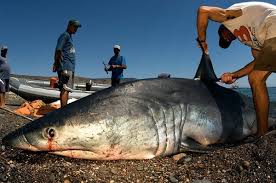
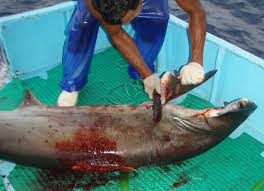
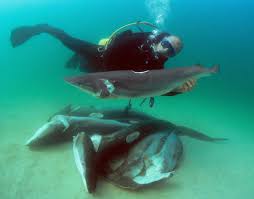

So the tale of shark finning begins. History shows that hundreds of years ago, shark fin soup was given to the Emperor of China as a symbol of status and prosperity. Originally the soup was solely for the Emperor. As time passed though, the soup became a status symbol for anyone who could afford a $100 bowl of soup. Since then shark fin soup has been used in all different kinds of Chinese functions. Now, some people claim that the fight to save sharks is rooted in racism against the Chinese. These claims are totally unfounded. Pockets of Chinese people claim that shark fin soup in deep rooted in Chinese tradition. Which it is not seeing as the Emperor has long since been off the throne and the only tradition was the soup being given to one man, the Emperor. There is no racism involved in the fight to save sharks. In fact, there are many Chinese people that are in the front of the fight to save sharks. The most well known is NBA star Yao Ming. Yao has been the cornerstone of the fight to save sharks for several years now and has helped really bring the plight of sharks to the Chinese people. The following pictures are the harrowing truth of the "tradition" of shark finning. Again, it is not a tradition at all. If it was tradition, I highly doubt that the Chinese government would have banned shark fin soup from all state banquets.
Final Warning: The following images are graphic in nature. Some reminders... Sharks reproduce very slowly, so any shark that is killed does impact the population. Adult sharks are not the only targets, babies are finned just as the adults are. Sharks are often still alive through the finning process. Sharks cannot swim without their fins and simply put, cannot survive without their fins.
Sunday, July 22, 2012
Manta and Mobula Rays Vanishing From the Seas
One of the massive issues with manta and mobula rays that people just don't seem to understand is that no one knows just how many of them exist. Originally, manta rays were all grouped together as one species. Scientists have since changed that so there are a few different species of manta rays that exist in the seas today. The status of these rays though is unknown. manta rays are very vulnerable to overfishing. Manta rays mature late in life and some will only give birth to 1 pup in their entire lives. As a result of this, scientists are starting to fear that populations of manta and mobula Rays are in a steady decline. Fisherman in Peru and Indonesia have confirmed that over the past few years, the rays that are caught have been smaller in size than ones caught in years prior.
This doesn't spell just bad news for the rays themselves, but it also spells bad news for the tourism industry as well. On average a manta ray is worth a mere $500 in the marketplace. The vast majority of that $500 comes from their gill rakers which can sell for as high as $500 themselves. The rest of the ray is virtually worthless. It is an incredibly different scenario with live rays. The value of a live manta ray to dive tourism is... $1,000,000. That's right. One million dollars. Lets break it down a bit. In Kona, Hawaii, the annual revenue from diving with manta rays comes to roughly 3.4 million dollars. In Ningaloo, Australia, the revenue from diving with mantas is roughly 1.8 million dollars. In Nusa Penida, Indonesia, diving with mantas produces an annual revenue of 3.5 million dollars. Do you see a trend here? The Republic of Maldives annual revenue from diving with manta is a whopping 8.1 million.
Again, a dead manta ray is worth just $500. That same ray, if allowed to live could help to raise over a million dollars in its life. The gill raker trade that fuels the slaughter of these animals undeniably makes money for those who sell them. This however is nothing more than a short term way of making money. The incredibly slow reproductive rate of these animals means that there usually isn't all that many living in one area. For example, in Yap there are just 100 rays living there. Diving revenues from those 100 rays comes to 4 million dollars. This is a great long term way for countries both large and small to make some serious money. Plus it is much more sustainable than killing a ray off for basically nothing more than its gill rakers. The moral is... Rays make more money for people alive than they do dead.
The sad thing is that people generally do not see it that way. What they see is a possible cure to disease, chickenpox, other diseases, and a better sex life. None of these positive things have any kind of scientific backing and are simply not true. For a diver or snorkeler though, mantas really do offer that dream of seeing something amazing. Every year, surveys show that mantas rank consistently in the top 3 of animals people want to swim with. Manta rays are in big trouble and their plight is not one that is very well known. As a result mantas are in more danger than people really think. The fate of manta and mobula rays remains cloudy, but efforts like the Manta Ray of Hope are helping to really save these creatures from the one thing that is forever... Extinction...
This doesn't spell just bad news for the rays themselves, but it also spells bad news for the tourism industry as well. On average a manta ray is worth a mere $500 in the marketplace. The vast majority of that $500 comes from their gill rakers which can sell for as high as $500 themselves. The rest of the ray is virtually worthless. It is an incredibly different scenario with live rays. The value of a live manta ray to dive tourism is... $1,000,000. That's right. One million dollars. Lets break it down a bit. In Kona, Hawaii, the annual revenue from diving with manta rays comes to roughly 3.4 million dollars. In Ningaloo, Australia, the revenue from diving with mantas is roughly 1.8 million dollars. In Nusa Penida, Indonesia, diving with mantas produces an annual revenue of 3.5 million dollars. Do you see a trend here? The Republic of Maldives annual revenue from diving with manta is a whopping 8.1 million.
Again, a dead manta ray is worth just $500. That same ray, if allowed to live could help to raise over a million dollars in its life. The gill raker trade that fuels the slaughter of these animals undeniably makes money for those who sell them. This however is nothing more than a short term way of making money. The incredibly slow reproductive rate of these animals means that there usually isn't all that many living in one area. For example, in Yap there are just 100 rays living there. Diving revenues from those 100 rays comes to 4 million dollars. This is a great long term way for countries both large and small to make some serious money. Plus it is much more sustainable than killing a ray off for basically nothing more than its gill rakers. The moral is... Rays make more money for people alive than they do dead.
The sad thing is that people generally do not see it that way. What they see is a possible cure to disease, chickenpox, other diseases, and a better sex life. None of these positive things have any kind of scientific backing and are simply not true. For a diver or snorkeler though, mantas really do offer that dream of seeing something amazing. Every year, surveys show that mantas rank consistently in the top 3 of animals people want to swim with. Manta rays are in big trouble and their plight is not one that is very well known. As a result mantas are in more danger than people really think. The fate of manta and mobula rays remains cloudy, but efforts like the Manta Ray of Hope are helping to really save these creatures from the one thing that is forever... Extinction...
Saturday, July 21, 2012
Sharks: More Than Just Bite
Just how smart are sharks? It's a question that has tinkered with the human mind for many years now. Are they simply mindless eating machines? Or is there something more to them. Does the fact that 3/4 of their brains are dedicated to smell mean that these animals have little intelligence? The answer to both of those questions are no. Over the past few years there has been scientific discoveries that point to the direction of sharks having some form of intelligence and in some cases problem solving skills.
One shark in particular has been the subject of some of these discoveries, the whale shark. Yes the largest of all fish may be a bit smarter than most people would give them credit for. These massive sharks are the gentle giants of the sea and it appears that they are capable of doing some interesting things. One of which was caught on film and has spread like wildfire. The video shows a whale shark going up to a commercial fishing vessel's net and literally sucking the small fish back out of the net for a free meal. At the same time, the shark does not eat the net at all. Whenever it gets some of the net in it's mouth, it spits it out. Clearly an animal with one thing on its mind would not care to pick and choose what it is eating. Fishing vessels have also claimed that whale sharks have come up to their boats and gently push them around, almost like playing with them. It's an incredible thing when you think about it. Whale sharks are not alone, other species of shark including hammerheads, nurse, sand tiger, and lemon sharks are all known to form social groups from time to time. For example, scientists have found caves where over 30 sand tiger sharks were literally hovering motionlessly together in the water. Scientists have also found massive piles of over 200 nurse sharks, just hanging out together. Lemon sharks are known to spend the day resting with other lemon sharks before going off to hunt at night. Perhaps the most interesting is schools of blacktip reef sharks showing off their catches to one another by leaping out of the sea with their food hanging out of their mouths. It could be that these sharks, just like people, enjoy being around other members of there species.
Despite that being a possibility, we may never really know the truth about the intelligence of sharks. These animals are clearly smarter than what Jaws was made out to be. No shark in the entire world goes around eating and targeting humans 24/7. In fact, no shark truly targets a human. Anyway... Despite the sense of smell taking up a large portion of a shark's brain, it does seem that there is more than meets the eye going n inside the head of a shark. Not to sound crazy, but if we can save these animals from extinction now, who knows what we could learn about them. Nobody truly knows what goes on inside the head of a shark, but the moment you lay eyes on a living, breathing shark, you can tell that something is going on inside that head besides when their next meal is. Next time you go to an Aquarium, try it. Look at a shark and you should quickly be able to figure out what I mean. Now the question is, why would I type all of this up without mentioning the main reason I wanted to? Well here's the answer.
With Discovery Channel's Shark Week quickly approaching, people begin to get into a frenzy about sharks. I said it during an earlier blog and I will say it again, T.V. is just that, T.V. Shows that have sharks biting people, blood squirting everywhere is what draws people to Shark Week. For some strange reason, people seem to have an infatuation with being eaten. It has always been that way since the days of the Ancient Greeks. It's just fact that mankind is for some reason interested in things that can eat them. That infatuation though can lead to terrible things for the creatures of this planet, and it already has. Not just with sharks, Alligators were nearly driven off the planet, large snakes are killed by people out of fear, many people fear lions, tigers, and bears (no pun intended) and sure enough, they kill them as well. Anything that can harm and potentially consume a human brings up some of the deadliest emotions in a person. Fear. So while you sit and watch Shark Week this year and your heart starts to beat a little faster as you see that fin cutting through the water heading right towards an unaware surfer. Remember. It is television. Nothing more, nothing less. Shark attacks themselves are not as dramatic as you will see, they are nowhere near as common as you will see, and they are usually far less deadly than you will see. Keep in mind that a lot of the scenarios where divers are in the water with "hungry sharks" are staged in a sense where shark feeding tours take place and the sharks know a meal could be coming to them if they stick around in that area. You may see a diver get bit on a show, but you have to ask yourself what are the conditions surrounding the diver. So enjoy this year's Shark Week, but remember, there is far more to these animals than their bite!
Wednesday, July 18, 2012
The Return of "Jaws" or a Huge Misunderstanding
In the last 11 months there have been 5 fatal shark attacks committed by Great White Sharks. All attacks were in one place, Australia. The Government of Australia is now asking that the Conservation Status be looked at. Australia is seeking a removal of the protection of these sharks and even start a cull to reduce the population size of Great Whites in Australia.
This is a incredibly large overreaction. It is very unfortunate that the 5 attacks happened and I do feel for those who lost their loved ones, but the facts of the matter remains. Great Whites are not man eaters. Not a single one of the people who were attacked were eaten by the shark. All 5 cases can be boiled down to cases of mistaken identity. In Australia, great whites will often feed on marine mammals such as seals and sea lions. From underneath, the silouette of a surfer laying on their board is strikingly similar to that of a seal. You have a long body, 2 small flipper (hands) and 2 longer flippers (legs/feet). When Great Whites go to bite anything, the roll their eyes into the back of their head and becomes blind to whatever it is they are going to bite. They do this in an effort to protect their eye from an animal that may escape and scratch the shark in the eye with claws, a beak, etc.
The end result of these 5 attacks of course is a truly heartbreaking thing. Great Whites are so large and so powerful that a little 150-200lb person is like an ant to them. When they bite, it does a huge number on a person, sometimes resulting in death. The issue really is that Australia has always been a hot spot for Great Whites due to the fact that there is ample food there for them to eat. With that being said, the sharks have every right to be there. The fact that these animals may soon be hunted down for nothing more than the fact that they are an animal that cannot distinguish man from seal before becoming blind. There are things that Australia can do that does not involve killing off a species of shark whose remaining population is estimated to be no more than 3500.
For example, Australia can simply ban surfing from the beaches that Great Whites have claimed as their own. The government can outlaw swimming off of those beaches at peak shark hunting hours, usually in the morning and evening. Or they can install shark safe nets at these beaches to help deter sharks from coming too close to shore. The bottom line here is that this is not the return of the feared Jaws. There is not some shark out there trying to just pick off people for their own pleasure or satisfaction. The thing that everyone needs to remember is that the moment you step into the Ocean, you are in their world. All 5 of these attacks could have been avoided if there was more of an understanding of these animals. Again I am not unsympathetic to the families who lost their loved one, I just feel that there were ways that they could have avoided the situation and that there are better ways to prevent future attacks other than outright killing Great Whites for no reason.
This is a incredibly large overreaction. It is very unfortunate that the 5 attacks happened and I do feel for those who lost their loved ones, but the facts of the matter remains. Great Whites are not man eaters. Not a single one of the people who were attacked were eaten by the shark. All 5 cases can be boiled down to cases of mistaken identity. In Australia, great whites will often feed on marine mammals such as seals and sea lions. From underneath, the silouette of a surfer laying on their board is strikingly similar to that of a seal. You have a long body, 2 small flipper (hands) and 2 longer flippers (legs/feet). When Great Whites go to bite anything, the roll their eyes into the back of their head and becomes blind to whatever it is they are going to bite. They do this in an effort to protect their eye from an animal that may escape and scratch the shark in the eye with claws, a beak, etc.
The end result of these 5 attacks of course is a truly heartbreaking thing. Great Whites are so large and so powerful that a little 150-200lb person is like an ant to them. When they bite, it does a huge number on a person, sometimes resulting in death. The issue really is that Australia has always been a hot spot for Great Whites due to the fact that there is ample food there for them to eat. With that being said, the sharks have every right to be there. The fact that these animals may soon be hunted down for nothing more than the fact that they are an animal that cannot distinguish man from seal before becoming blind. There are things that Australia can do that does not involve killing off a species of shark whose remaining population is estimated to be no more than 3500.
For example, Australia can simply ban surfing from the beaches that Great Whites have claimed as their own. The government can outlaw swimming off of those beaches at peak shark hunting hours, usually in the morning and evening. Or they can install shark safe nets at these beaches to help deter sharks from coming too close to shore. The bottom line here is that this is not the return of the feared Jaws. There is not some shark out there trying to just pick off people for their own pleasure or satisfaction. The thing that everyone needs to remember is that the moment you step into the Ocean, you are in their world. All 5 of these attacks could have been avoided if there was more of an understanding of these animals. Again I am not unsympathetic to the families who lost their loved one, I just feel that there were ways that they could have avoided the situation and that there are better ways to prevent future attacks other than outright killing Great Whites for no reason.
Monday, July 16, 2012
Gill Raker Harvesting Joining Shark Finning
Shark finning is a major problem in the world. Every year millions of sharks are killed exclusively for their fins. As one would expect this has a horrific effect on the populations of sharks. In fact it is starting to become difficult to find enough sharks to fill the demand for fins. Recently there has been a rise in a new substitute for fins. This substitute is just as unsustainable to the Oceans as shark finning. The practice is the the harvesting of the gill rakers of both Manta and Mobula rays.
This disgusting process is just as damaging to these rays as finning is to sharks. Naturally, Mantas and Mobulas will swim through the Oceans filter feeding, similar to whale and basking sharks, eating only the smallest of creatures such as plankton and krill. They have never injured a human yet the demand for their gill rakers has skyrocketed in the last few years. The ultimate question is why the demand has increased and just what the gill rakers are used for.
The reasons for the high demand for gill rakers are virtually the same reasons there is such a large demand for shark fins...
1.) False Medicinal Reasons
Very similar to shark fins, many people falsely believe that ray gill rakers will help to cure disease, such as cancer and chickenpox,, increase respiratory functions, and lead to a better sex life. Just like shark, there is no scientific evidence of gill rakers doing any of the mentioned things. Still though, people believe that gill rakers do in fact do these amazing things and continue to demand them.
1.) False Medicinal Reasons
Very similar to shark fins, many people falsely believe that ray gill rakers will help to cure disease, such as cancer and chickenpox,, increase respiratory functions, and lead to a better sex life. Just like shark, there is no scientific evidence of gill rakers doing any of the mentioned things. Still though, people believe that gill rakers do in fact do these amazing things and continue to demand them.
2.) Financial Appeal
Shark fins sell for a large sum of cash. Ray gill rakers sell for an incredible sum of cash. Currently the gill rakers of a ray is worth roughly $500USD per Kilogram in China. Sharks are vanishing from the seas and people are searching for an alternative to show off their status. In this case, the gill rakers of rays. Outside of the gill rakers, Manta and Mobula rays are virtually worthless. Just like shark meat, the meat of these rays are virtually worthless, often times being under $20 for an entire ray's worth. Mind you, Mantas can be very large rays. The skin of the ray is worth about as much as shark skin, virtually nothing. The cartilage of the ray is used for a substitute for shark cartilage pills. Again, it is virtually worthless in value.
3.) Very Loose Regulations
The harvesting of gill rakers is one of the least regulated and even reported slaughters going on in the world right now. Much like shark finning, if a nation does have a law to help protect rays, it is not enforced very well because of the financial situations of the countries. However, there are literally no noteworthy nations outside of Peru and Indonesia, that have any kind of restriction on harvesting rays. There aren't even any real regulations on Aquariums going out and collecting them. The lack of regulations probably has a lot to do with the lack of knowledge on the populations of these rays. Fisherman in several countries have reported a sharp decline in the size of the rays caught as well as the number. The same can be said with shark finning, countless numbers of smaller sharks are being killed off and fewer and fewer large sharks are being seen.
The threats that these rays face need to be cut out before things get just as out of hand as shark finning. Rays play an incredibly important role in the Oceans and eliminating them for nothing more than money and false medicinal cures is simply disgusting. We know so little about these animals yet we are simply killing them off. Nobody truly knows the life cycle of a Manta or Mobula ray, their populations, capabilities, their level of though, virtually nothing. All we truly know is that they are rays that eat the tiniest creatures in the Oceans. We know that they mature late in life and that they have a pretty good lifespan, but we don't know the details on how these animals really work.
The fight to save rays is just getting started. The combined efforts of WildAid and Shark Savers have resulted in the project known as Manta Ray of Hope. The objective of the project is to raise awareness for these animals as well as trying to kill the incredibly fast rising demand for gill rakers. For more information on Manta Ray of Hope check out mantarayofhope.com
My next blog featuring Manta and Mobula Rays will continue to bring their plight into the light and put some things that we do know out there about these truly amazing and beautiful creatures.
Subscribe to:
Comments (Atom)